Why is my roof leaking around the chimney in Punta Gorda
Chimney leaks in Punta Gorda almost always trace back to failed flashing, not the chimney itself. Here's how to find the cause and what repair costs in 2026.
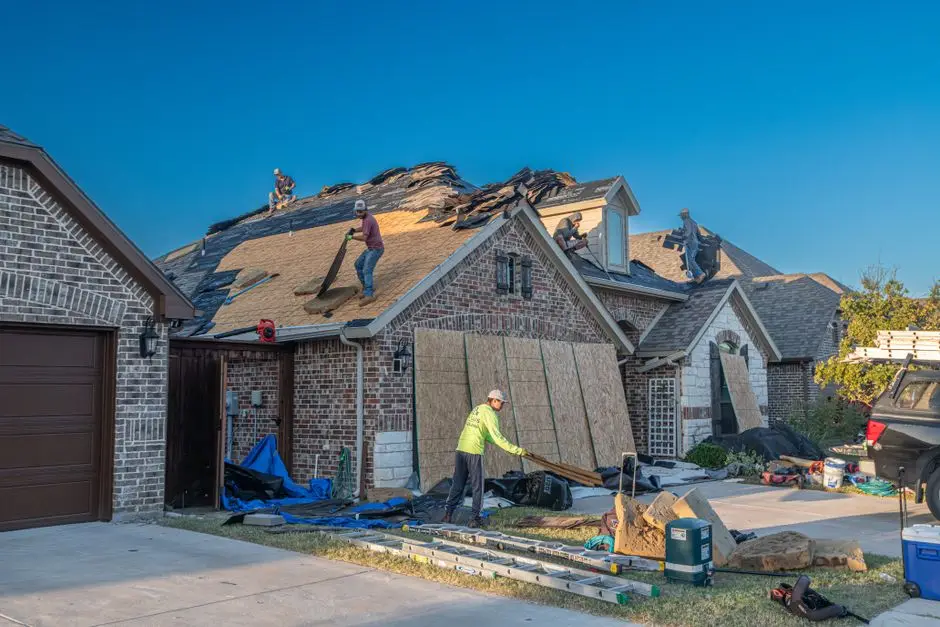
Your roof is leaking around the chimney in Punta Gorda because the flashing that seals the gap between the chimney and the roof deck has failed. Flashing is the metal - usually aluminum, copper, or lead - that steps into the brick or block on one side and laps over the shingles or tile on the other. When it rusts, pulls loose, or was installed wrong in the first place, water runs straight down the chimney chase and shows up on your ceiling, often far from the chimney itself. This post walks through the specific causes we see across Punta Gorda, how to trace the leak, what repair costs in 2026, and when it's time to hand it to a roofer.
The short answer: it's almost never the chimney itself
Why is my roof leaking around the chimney in Punta Gorda is a question that gets answered the same way nine times out of ten: the chimney masonry is fine, the flashing is not. Brick and block absorb water, but they don't usually let it pour into your attic unless the counter-flashing and step-flashing have already given up. That's the definitional piece worth holding onto - chimney roof leak repair is the trade of re-sealing the roof-to-chimney junction, not rebuilding the chimney.
Punta Gorda sits in one of the harshest roof environments in the country. Salt air off Charlotte Harbor eats fasteners and thin-gauge aluminum. Summer afternoon storms dump two inches in an hour. UV index runs high enough that sealants that last ten years in Ohio are chalk in three here. A chimney that was watertight when the house was built may be wide open by year eight. If you want the broader picture of how we handle these calls across the state, our Roof Leak Repair in Florida page covers the full scope of what we do.
Why is my roof leaking around the chimney in Punta Gorda?
The reason chimney leaks are so common in Punta Gorda specifically is the combination of salt-laden air, intense UV, and the daily thermal swing that expands and contracts metal flashing against masonry. Every one of those forces attacks the same small area - the roughly 18 to 24 inches of roof-to-chimney junction on each side of the chase. There is no other spot on a residential roof that takes that much punishment in that small a footprint.
We also see a lot of 1990s and early-2000s construction in Punta Gorda Isles, Burnt Store, and Deep Creek where the original builder used 26-gauge aluminum step flashing with a thin asphalt-based sealant. That combination has a realistic service life of about 12 to 15 years in this climate. If your home was built before 2010 and you've never had the flashing touched, you're on borrowed time.
The five chimney leak causes we find most in Punta Gorda
Chimney flashing leak Punta Gorda homeowners call us about almost always traces back to one of five failures. Here's what we actually find when we get on the roof.
1. Rusted or corroded step flashing
Step flashing is the L-shaped metal that weaves into each course of shingles or tile alongside the chimney. Salt air oxidizes the thin aluminum fast. Once rust perforates the metal, water passes through like it isn't there. This is the single most common cause we find on homes within five miles of the harbor.
2. Failed counter-flashing and mortar joints
Counter-flashing is the metal that gets tucked into a reglet - a groove cut into the masonry - and then bent down over the step flashing. The sealant in that reglet cracks. When it does, water gets behind the metal and into the wall. We regrout and re-seal reglets on nearly every chimney we touch.
3. Deteriorated chimney cap and crown
The concrete crown on top of the chimney is supposed to shed water away from the flue. Hairline cracks let water in, and in Punta Gorda those cracks grow fast with the heat. A cracked crown can send water down the inside of the chimney chase and out through the ceiling - a leak that looks nothing like a flashing problem until you get up there.
4. Missing or damaged cricket
Any chimney wider than 30 inches on the upslope side needs a cricket - a small peaked diverter that pushes water around the chimney instead of letting it pile up against the back. Plenty of Punta Gorda homes never had one, or had one built from the same shingles as the roof and long since rotted out.
5. Wind-driven rain during named storms
During a tropical storm or hurricane, rain gets driven sideways at 60 to 90 mph. Even a properly flashed chimney can leak under those conditions. If your leak only shows up during named storms, that's a different repair than a chronic drip - usually it means the flashing is marginal and needs to be rebuilt to a higher standard.
How to trace a chimney roof leak in Punta Gorda FL
Tracing a chimney roof leak in Punta Gorda FL starts in the attic, not on the roof. Water travels along rafters and sheathing before it drips, so the stain on your ceiling is usually 5 to 15 feet from the actual entry point. Here's the sequence we run.
- Go up during or right after rain. A dry attic tells you nothing. Look for active drips, wet sheathing, or dark staining along the chimney chase.
- Check the chimney chase first. If the wood framing around the chimney is wet but the rest of the deck is dry, the leak is at the flashing, not the field of the roof.
- Look at the ceiling stain direction. Water follows the low side of a rafter. The stain points toward the entry point, not away from it.
- Get on the roof and inspect the flashing. Look for lifted metal, rust holes, missing fasteners, cracked sealant in the reglet, and gaps at the corners.
- Water-test from the bottom up. Start low on the chimney and work upward with a hose. Stop the moment water appears inside. That's your entry point.
If you'd rather not climb a wet roof in a Punta Gorda summer, that's what we're here for. Our chimney roof leak repair in Florida service is built around exactly this diagnostic sequence, and we do it on the same visit.
What chimney roof leak repair costs in Punta Gorda in 2026
Typical 2026 pricing for chimney roof leak repair in Punta Gorda runs $450 to $1,400 for a standard flashing rebuild, and $1,800 to $3,500 if the chimney crown, cricket, and counter-flashing all need replacing at the same time. Those are real numbers from jobs we've run this year, not national averages pulled from a calculator.
What moves the price:
- Roof pitch and access. A steep two-story roof takes longer and costs more than a single-story ranch.
- Roof material. Asphalt shingles are quick to reset. Tile and metal require more care to remove and reinstall without breaking pieces.
- Extent of damage. Replacing step flashing only is the low end. Rebuilding the reglet, replacing the crown, and adding a cricket is the high end.
- Hidden rot. If water has been getting in for a year or more, you may be looking at sheathing or framing repairs on top of the roof work.
If the leak is active and it's raining now, we can stop the water today with emergency roof tarping in Florida and come back to do the permanent repair when the weather clears. That's usually the difference between a $600 repair and a $6,000 ceiling and insulation replacement.
Common mistakes homeowners make with chimney leaks
The most expensive chimney leak mistakes we see in Punta Gorda are the ones that delay the real fix. Here's what to avoid.
- Slapping roof cement on the outside of the flashing. This is the number one mistake. It looks fixed for one rainy season, then fails worse because the water is now trapped behind the sealant.
- Sealing the chimney from the inside. Waterproofing the interior of the chase does nothing for a leak that's entering at the flashing.
- Assuming it's the shingles. Homeowners replace whole roof sections chasing a leak that was a $500 flashing repair the entire time.
- Waiting for the dry season. Every rain event between now and then adds to the damage. Rot, mold, and ruined insulation don't wait.
- Hiring the cheapest bid without a diagnostic. If a roofer quotes you a chimney repair without getting on the roof and water-testing, they're guessing.
One more: don't ignore a leak that only shows up during hurricanes. That's not a fluke - it's a flashing system that's already marginal and will fail completely within a season or two.
When to call a professional
Call a professional the moment you see water staining on a ceiling or wall near the chimney, because by the time water shows up inside, it's been entering the assembly for weeks or months. Chimney leaks are not a wait-and-see problem in this climate.
You should also call us if any of these are true:
- The leak returns after a previous repair - that means the original diagnosis was wrong.
- You can see rust, lifted metal, or gaps at the flashing from the ground.
- The chimney crown has visible cracks or missing chunks.
- Your roof is more than 12 years old and has never had the flashing inspected.
- You're within 30 days of a real estate closing and need documentation.
Weatherproof Roofing Inc handles chimney roof leak repair across Punta Gorda and the surrounding Charlotte County area. We diagnose on the roof, quote the repair on the spot, and do the work with materials rated for this climate - not the same thin-gauge aluminum that failed the first time. If you're in a neighboring community like Roof Leak Repair in Sarasota, we cover that too, and the same flashing failures show up there for the same reasons.
Frequently Asked Questions
Why is my roof leaking around the chimney in Punta Gorda?
Failed flashing is the cause in about 90% of cases. Salt air, UV, and daily thermal expansion break down the metal and sealant at the roof-to-chimney junction. The chimney itself is usually fine. A cracked crown or missing cricket can also be responsible.
How much does chimney roof leak repair cost in Punta Gorda?
Expect $450 to $1,400 for a standard flashing rebuild in 2026, and $1,800 to $3,500 if the crown, cricket, and counter-flashing all need replacement. Emergency tarping to stop active water runs $300 to $700 and is often credited toward the permanent repair.
Can I fix a chimney roof leak myself in Punta Gorda?
You can stop an active leak temporarily with a tarp, but a permanent fix requires removing and rebuilding the flashing system, re-cutting the reglet, and re-sealing it to masonry. Roof cement over the top is the most common DIY mistake and usually makes the damage worse. This is a two-person job on a wet, pitched roof.
How long does chimney roof leak repair take?
Most flashing rebuilds take three to five hours on a single-story asphalt roof. Tile roofs, two-story homes, and jobs that include crown or cricket replacement run a full day. We can usually schedule within 48 hours and treat active leaks as same-day priorities.
Will my insurance cover a chimney roof leak in Punta Gorda?
Sudden damage from a named storm is usually covered. Long-term deterioration from wear, rust, and failed sealant is typically excluded as maintenance. We document the cause with photos so you have what you need either way.
Get help with Roof Leak Repair in Punta Gorda
If water is coming in around your chimney, every day you wait adds to the repair bill. We'll get on the roof, find the actual entry point, and give you a straight answer on what it takes to fix it right.
Call Weatherproof Roofing Inc at (833) 356-1017 and we'll get a technician out to your Punta Gorda home.